The parameter is incorrect.Image size is not supported. Each image dimension must be between 40 and 2600 pixels.
I’ve recently had the good fortune of having a paper based on data obtained from my 2022 Global Drug Survey mescaline cacti module accepted at The Journal of Psychedelic Studies. The paper isn’t published yet, but you just happen to know a guy… read the complete accepted manuscript here.
Engel, L., Barratt, M., Ferris, J., Puljevic, C. & Winstock, A. (2023). Choosing San Pedro or Peyote: A preliminary descriptive study of mescaline cacti consumers. Journal of Psychedelic Studies.
Abstract
Background and Aims
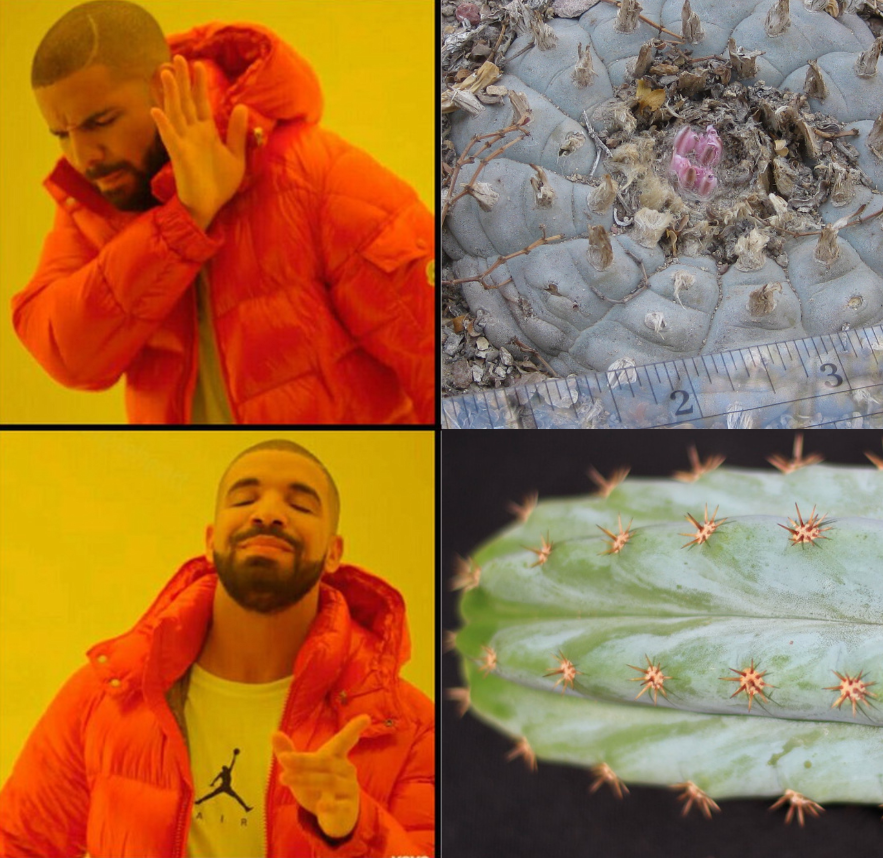
Both Peyote and San Pedro cacti contain mescaline, a classical psychedelic eliciting mystical and visual effects, but only Peyote is a vulnerable species. We sought to address the questions 1; do people who use Peyote substitute with San Pedro, and vice versa, and; 2. how popular is the use of wild harvested mescaline cactus compared with the use of cultivated plants?
Methods
Data were collected as part of the 2022 Global Drug Survey, a self-report survey distributed internationally in 11 languages. We asked mescaline cacti consumers about consumption practices, preferences and conservation and conducted chi square tests of associations comparing all motivations by preferred mescaline source.
Results
Of participants who reported using mescaline in the last 12 months (N = 284; 73.2% male, 21.8% female, 5.0% other gender; mean age 36.3, SD 12.5), 20.0% reported consuming Peyote collected from native habitats. Of participants specifying Peyote as their preferred source of mescaline, 82.2% had consumed Peyote in the past 12 months.
Indigenous cultural traditions (57.8%), availability (40.0%) and environmental sustainability (33.3%) were the most commonly reported motivations for Peyote preference (n=45), whereas for San Pedro (n=86), availability (54.7%), potency (45.3%) and indigenous cultural traditions (44.2%) were most the commonly reported San Pedro preference motivations. Price and potency were significantly more likely to be chosen by those preferring San Pedro compared with Peyote.
Less than 7% of participants who consumed San Pedro in the past 12 months had consumed San Pedro from native habitats. Of the participants who specified San Pedro as their preferred source of mescaline, 96.5% had consumed San Pedro in past 12 months. San Pedro was the most commonly reported source of mescaline product consumed (56.1%) with Trichocereus bridgesii being the most reported preferred San Pedro species. Mescaline cacti consumed in the last 12 months rarely deviated from mescaline cacti of preference.
Conclusions
Wild Peyote is not the most popular mescaline source, but consumption of related products remains unsustainable. Promoting San Pedro as a Peyote substitute may act as an intervention to reduce Peyote consumption.