Performing an oral care needs assessment
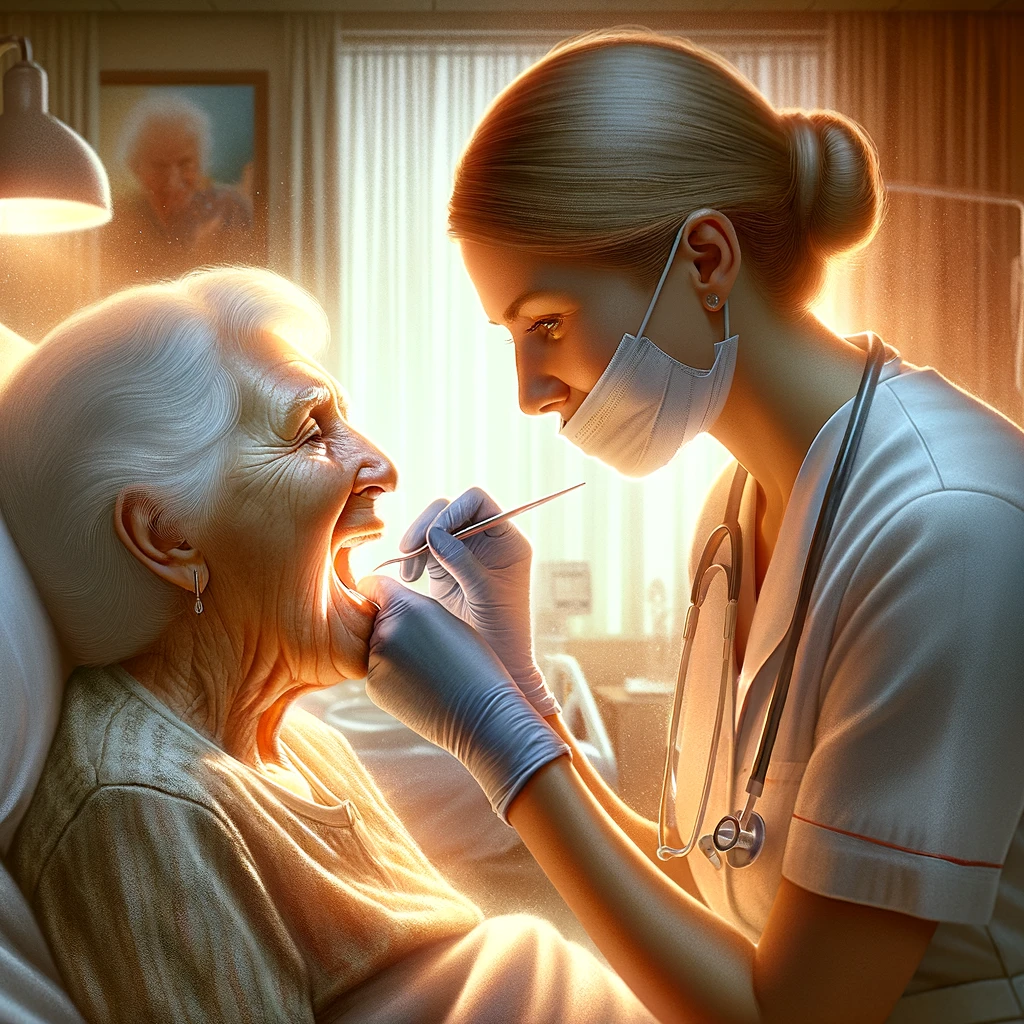
Conducting an oral care needs assessment is a vital component of your nursing care, particularly for patients who are hospitalised or have compromised health. This assessment helps in identifying potential oral health issues, contributing to overall patient well-being and preventing complications. Here’s a step-by-step guide:
1. Prepare for the Assessment:
- Gather Supplies: Ensure you have gloves, a flashlight or penlight, a tongue depressor, and any other necessary equipment.
- Review Patient History: Check the patient’s medical and dental history for any existing conditions or medications that may affect oral health.
- Communicate: Explain the process to the patient. Ensure they understand the importance of oral health and how it relates to their overall health. Obtain their consent before proceeding.
2. Initial Observation:
- Overall Appearance: Note any signs of discomfort, pain, or distress that could indicate oral health issues.
- Lips and Skin: Check for dryness, cracks, sores, or lesions on the lips and surrounding skin.
- Breath: Notice any odours that could indicate decay or infection.
3. Assessment of the Oral Cavity:
- Hygiene and Moisture: Assess the cleanliness and moisture of the mouth. Dry mouth (xerostomia) can lead to various oral health issues.
- Gums and Teeth: Look for redness, swelling, or bleeding in the gums. Check for missing teeth, decay, or damaged dental work.
- Tongue and Floor of the Mouth: Examine the tongue, under the tongue, and the floor of the mouth for abnormalities like swelling, discoloration, or lesions.
- Palate and Throat: Inspect the roof of the mouth and the back of the throat for redness, sores, or white patches.
4. Assess Patient’s Ability:
- Self-Care Capabilities: Determine the patient’s ability to perform oral care independently. Assess their dexterity, strength, and cognitive function.
- Assistance Required: Based on the assessment, decide the level of help the patient needs for effective oral care.
5. Risk Factors:
- Medical Conditions: Identify conditions that may impact oral health, such as diabetes or autoimmune diseases.
- Medications: Note any medications that cause dry mouth or other oral health side effects.
- Nutritional Status: Consider the patient’s nutrition and hydration status, as these can affect oral health.
6. Develop a Care Plan:
- Personalised Plan: Based on the assessment, develop an individualised oral care plan for the patient. This should address any identified issues and include regular oral hygiene practices.
- Instruction and Education: Teach the patient and their caregivers about proper oral hygiene techniques and the importance of maintaining oral health.
- Follow-Up and Monitoring: Schedule regular times to reassess the patient’s oral health and adjust the care plan as necessary.
7. Documentation:
- Record Findings: Document your observations, the patient’s self-care abilities, and any risk factors.
- Care Plan: Include the personalised oral care plan in the patient’s records.
- Educational Efforts: Note any instructions given to the patient or caregivers and their responses.
A specimen oral health assessment tool can be seen below.
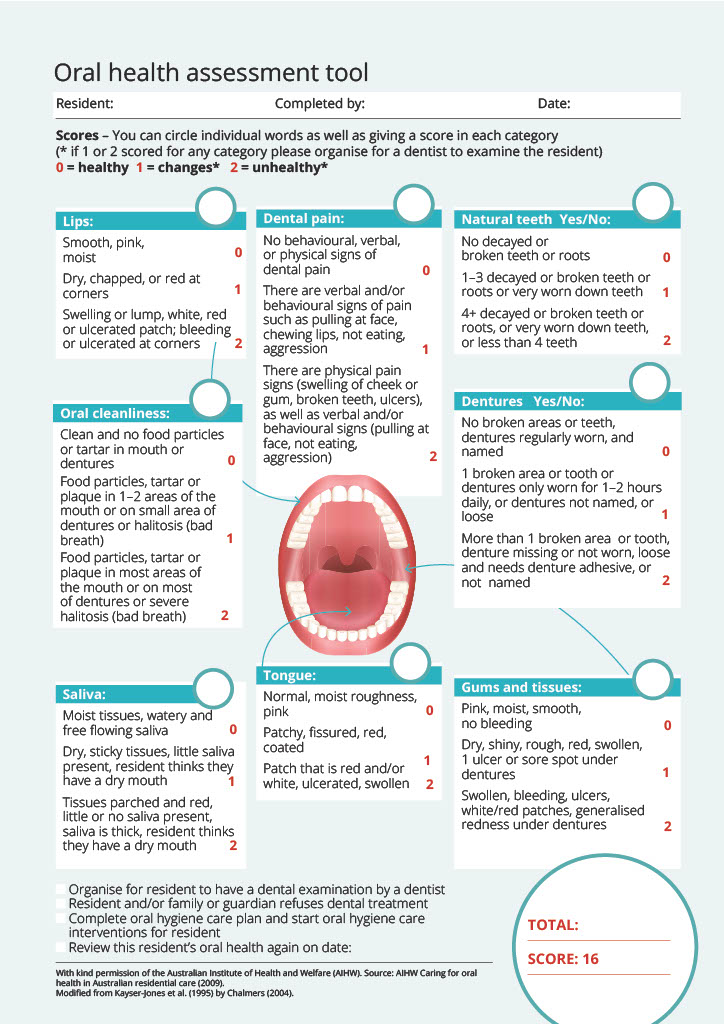
A mouth assessment tool from the Australian Institute of Health and Welfare. The score sheet is available here.
Conclusion:
Performing a comprehensive oral care needs assessment is crucial in maintaining the patient’s overall health and preventing potential complications. As a nurse, your attention to detail, thorough assessment skills, and personalised care plans can significantly contribute to the well-being and recovery of your patients. Remember, oral health is an integral part of holistic patient care.